
SUBCULTURE IS DEAD: THE ALGORITHM ATE THE UNDERGROUND”
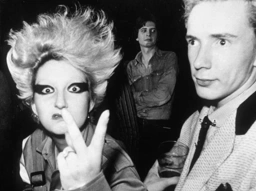
Punks Jordan and Johnny Rotten circa 1970. Photograph: Ray Stevenson/Rex Features
There was a time when finding your people meant risking something.
You risked being misunderstood. You risked getting jumped, arrested, banned from venues, kicked out of school, or blacklisted by polite society. You risked never fitting back in. Subculture wasn’t a vibe or a look — it was a line you crossed knowing full well there might be no way back.
Now it’s a dropdown menu.
Punk. Skate. Hip-hop. Graffiti. Rave. Each one reduced to an aesthetic pack you can unzip, remix, and monetize before lunch. What once took years of immersion now takes a Wi-Fi connection and a decent camera.
Welcome to the era where rebellion is optimized, culture is flattened, and subculture is something you consume, not something that consumes you.
Subculture didn’t die quietly. It was strip-mined, content-farmed, aestheticized, algorithmically boosted, and sold back to us with free shipping.
And most of us clapped.

SUBCULTURE USED TO BE A DEAD END — AND THAT WAS THE POINT
Punk didn’t ask to be liked. Hip-hop didn’t ask to be understood. Skateboarding didn’t ask permission.
They all emerged from the same conditions: boredom, poverty, exclusion, and a deep distrust of institutions. Punk kids had nothing to lose. Early hip-hop artists were building worlds out of abandonment and surveillance. Skaters were repurposing architecture designed to keep people out and turning it into a playground.
None of this was meant to be respectable.
You didn’t discover these scenes through recommendation engines. You found them through older kids, burnt CDs, zines, VHS tapes, pirate radio, skate shops, record stores, block parties, and word of mouth. Access was limited. Information was imperfect. And that friction mattered.
Scenes were local, territorial, and often hostile to outsiders. New York hip-hop didn’t sound like LA. West Coast skating didn’t move like East Coast. London punk didn’t look like Sydney punk.
That lack of uniformity was the culture.